

The lemons of Lake Garda: a story beyond the limit and the impossible
Mankind has always challenged the impossible, and on the western shore of Lake Garda, two extraordinary examples came to life. The first is the famous road carved into the rock, a spectacular work cut into the cliffs plunging into the lake, with panoramic terraces connecting the south and north of Garda. The second is even more astonishing: the lemon houses of Lake Garda, a unique phenomenon in the world.
Here, lemons are grown at a latitude of 46° north, well beyond the ideal limit of the 40th parallel. An exceptional result, made possible by the microclimate of the Benaco and, above all, by human ingenuity and perseverance, capable of transforming a difficult territory into a precious resource.
The lemons of Lake Garda
The golden fruits were brought here to Lake Garda from Liguria by the friars of the Convent of San Francesco in Gargnano at the end of the 1200s, but it was between the 1600s and 1800s that lemon production became a major economic driver for Garda, giving rise to an architecture unique in the world that left artists and writers such as D.H. Lawrence and J. Goethe astonished.
Tall stone walls were built to protect the trees from the wind, and in winter these open-air greenhouses were covered with roofs and glass panes to shield them from the cold — a cold that was, nonetheless, always mild compared to the northern shore of Lake Garda: when it snowed in Riva, here it merely rained.
If the winters were too harsh, braziers were lit inside the lemon houses to protect the plants, and the sight from the shore must have been incredible: these tall towers of stone, wood and glass ablaze with light.
When you travel the western Gardesana road between Salò and Riva, you can still admire the lemon houses, imposing structures that defy the steep slopes of the coast and rise toward the sky. Most are now private residences, but three still remain in Tignale, Gargnano and Limone.
Around the lemon houses revolved the work and skill of many people, as well as the entire artisan and rural culture of whole generations, who drew the benefits of a thriving economy from the trade of lemons, oranges and citrons until the end of the 19th century. By the mid-19th century, the period of greatest development, almost 50 hectares were devoted to citrus cultivation, with around 35,000 productive plants and an average annual harvest of 15-20 million lemons for export, mainly to eastern and northern Europe.
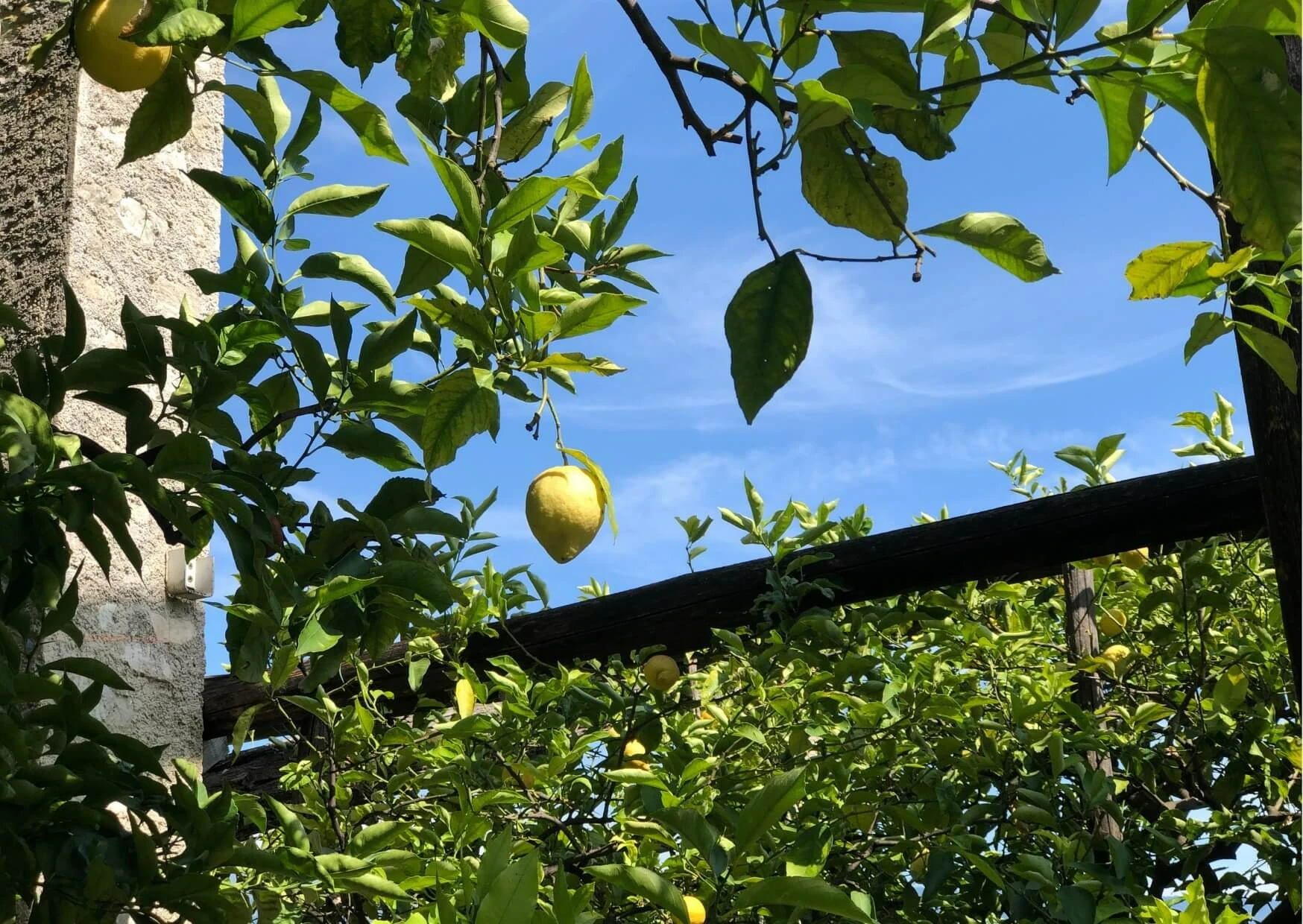
Where you can still find the Madernina: Limonaia La Malora in Gargnano
In Gargnano, Fabio Gandossi still carries on his father Giuseppe Gandossi’s dream, tending to the lemon trees of Limonaia La Malora. Recovered from a state of complete abandonment, the cultivation has now been fully restored and follows the ancient tradition of covering the trees when winter arrives.
Here, you can find a precious treasure: the Madernina, a lemon variety native to Lake Garda.
Would you like to visit the lemon houses of Garda? Ask our reception team, or book the guided tour directly:
The Lemon Houses of Gargnano: A guided walk discovering the incredible lemon houses of Gargnano
When: from 18/06 to 13/09 every Tuesday and Friday at 10 AM – from 20/09 to 18/10 every Friday at 10 AM
Where: Gargnano Town Hall, Via Roma 47, Gargnano
Duration: about 3 hours
Price: €24.00 per person, including a small tasting of local products at the Terre&Sapori cooperative (free for children up to 11 years old)
Bookings: up to 24 hours in advance, by 5:00 PM
Information and bookings: tour@terresapori.it
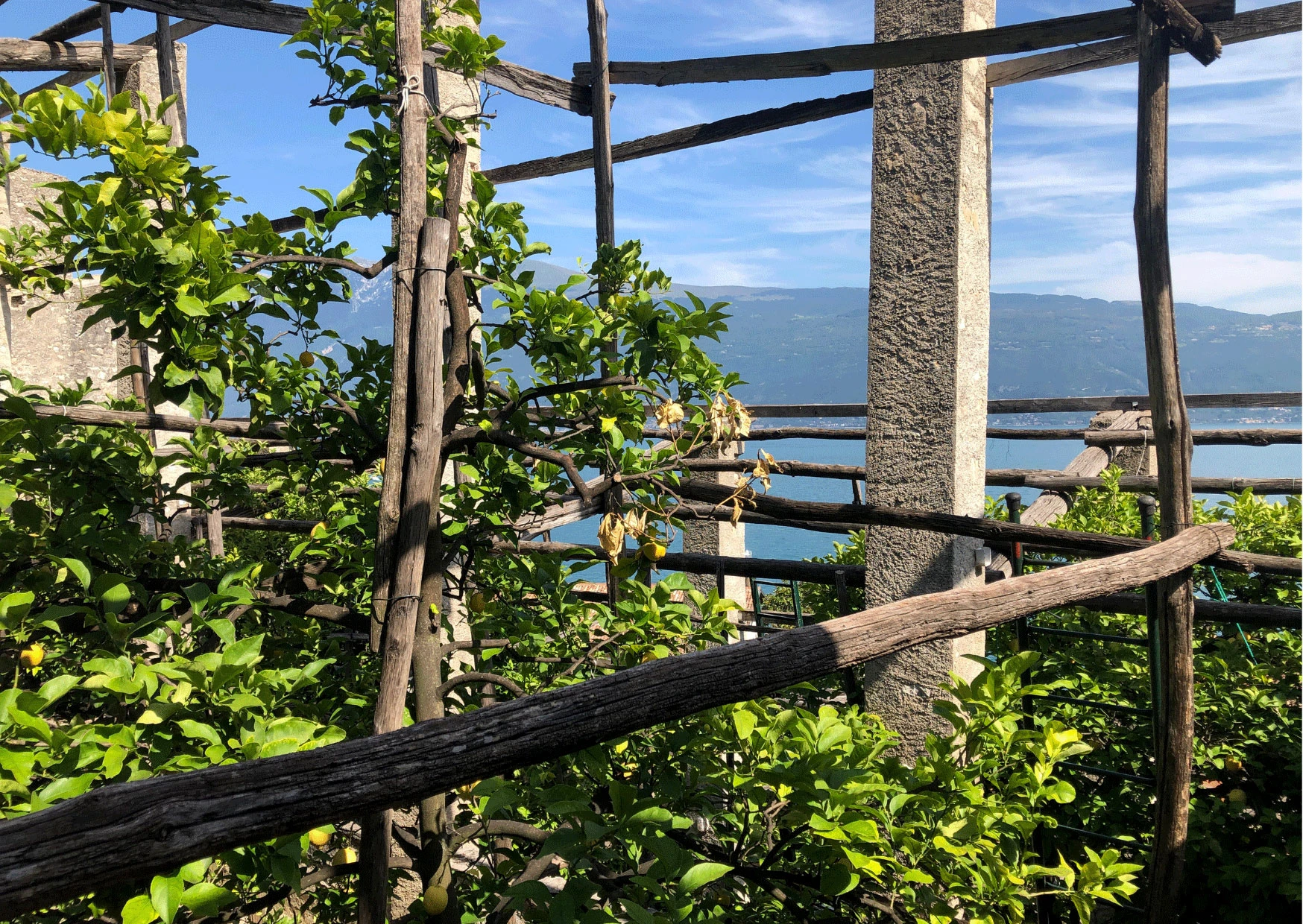
The Limonaia del Castel in Limone
In Limone, the Limonaia del Castel survives thanks to the work of the local municipality, along with Franco Usardi, the living memory of the lemon house, who is ready to tell you about the lemons, the channels used to irrigate the lemon groves by drawing water from the Rio Malora, and the resilient lemon tree that survived the terrible frost of 1985.
He will tell you that our ancestors faced three challenges in cultivating lemons: fighting the cold, finding good soil, and bringing water — but they overcame all three, and today the lemons, with their white blossoms and yellow fruits, stand here as proof of it.
The lemon house of Tignale: Pra de la Fam
The most fascinating lemon house remains that of Pra de la Fam, a stretch of coastline between Tignale and Limone that could once only be reached by lake. The name seems to derive from the fact that sailors would take shelter here from the lake’s terrible storms, sometimes remaining for days without food, waiting for the weather to calm so they could return home.
Here you’ll find the largest lemon house on Lake Garda, still in operation today with its own eco-museum: you can discover all the secrets of lemon cultivation, the tools used, and let yourself be enchanted by the view enjoyed from the upper floors of the building. Perhaps the lemons feel right at home at these latitudes, thanks in part to the beauty and enchantment of our lake.